
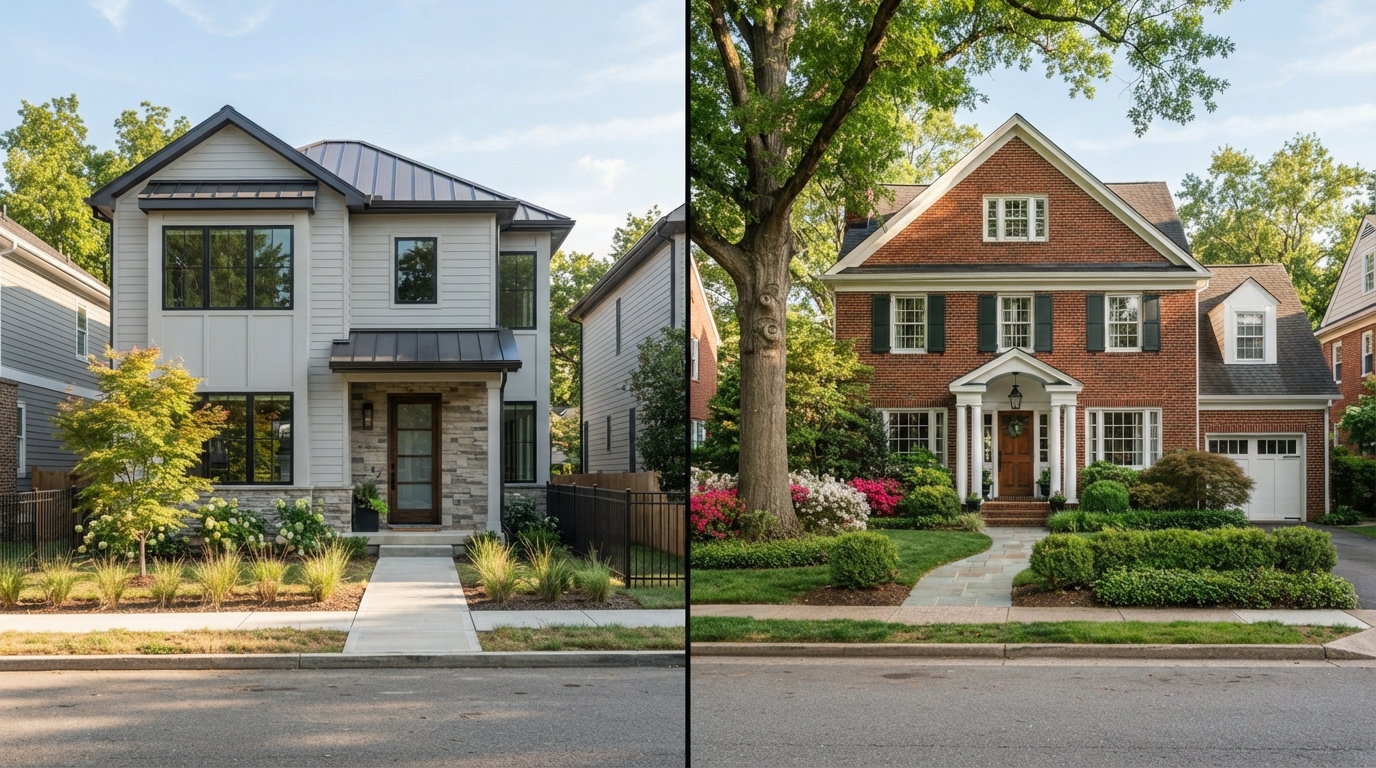
New Construction vs Existing Homes in the DMV: How to Choose in 2026
Every buyer in the DMV eventually faces this decision: do you buy a new construction home from a builder or an existing resale home from a previous owner? Both options have genuine advantages and real trade-offs, and the right answer depends on your priorities, timeline, and target location.
Here is an honest, real-numbers comparison of new construction versus existing homes in DC, Maryland, and Northern Virginia in 2026.
The New Construction Landscape in the DMV
New construction in the DMV in 2026 is concentrated primarily in outer suburban counties where land for development exists, Prince William County, Loudoun County, southern Charles County, Frederick County, and selected infill developments in closer-in locations like National Harbor's ongoing Flats expansion.
The DMV is not a market with abundant new construction close to the urban core. The inner suburbs, Arlington, Alexandria, Bethesda, Rockville, close-in Prince George's County, have very limited new construction because available land has been absorbed over decades. Buyers seeking new construction in the DMV typically need to accept that it means going further from the DC urban center.
The Price Premium for New Construction
New construction in the DMV commands a premium over comparable existing homes, typically in the range of 10% to 20% above the resale equivalent. On a $500,000 home, that means new construction might cost $550,000 to $600,000 for a genuinely comparable unit in the same general area.
However, the price comparison requires nuance. A new construction home includes features that an older resale typically does not, warranty coverage, new systems, modern layouts, energy-efficient construction, and no deferred maintenance. When you buy an existing home at a lower sticker price, you often spend $15,000 to $40,000 in the first few years on updates, replacements, and repairs that a new construction home does not require.
The true cost comparison is not purchase price alone. It is purchase price plus expected near-term repair and update costs on the existing home versus purchase price plus any premium on new construction.
Builder Incentives in 2026
The 2026 DMV market has brought a meaningful shift in builder behavior. With more inventory and more cautious buyers, many builders are offering incentives that reduce the effective cost of new construction substantially.
Common builder incentives in the current market include interest rate buydowns where the builder pays for a temporary or permanent rate reduction, closing cost credits of $10,000 to $40,000 applied at settlement, free or reduced-cost options and upgrades, and HOA fee waivers for one to two years.
The National Harbor Flats expansion, for example, has offered credits of up to $40,000 applicable toward rate buydowns or closing costs for early buyers in the new phase. These incentives meaningfully change the new construction cost calculation.
The important caveat on builder incentives is that builders typically require you to use their preferred lender to access their incentives. The preferred lender's rate and terms may or may not be competitive with the open market. Always get an independent mortgage quote to compare before committing to the builder's lender solely for the incentive.
What New Construction Delivers
New construction gives buyers a defined set of genuine advantages that resale homes cannot match.
Warranty protection is the most significant. New construction typically includes a one-year warranty on workmanship and materials, a two-year warranty on mechanical systems including electrical, plumbing, and HVAC, and a ten-year structural warranty. Buying a new home means you are protected against the unexpected repair costs that catch resale buyers off guard in the first few years.
Modern layouts and energy efficiency. New DMV construction in 2026 reflects current buyer preferences, open floor plans, primary suites with larger bathrooms, dedicated home office space, and energy-efficient construction that reduces utility costs meaningfully compared to homes built in prior decades.
Customization. Buying before a community sells out allows buyers to select finishes, fixtures, and sometimes floorplan variations. The ability to choose your own cabinets, flooring, and countertops adds personalization that resale homes require renovation to achieve.
Move-in ready condition. No deferred maintenance. No repairs needed before you move in. No negotiating over inspection findings. The home is new.
What Existing Homes Deliver
Existing homes offer advantages that new construction cannot always match, particularly in the DMV's geographic context.
Location. The most desirable, established neighborhoods in the DMV, Capitol Hill, Georgetown, Old Town Alexandria, Bethesda, Vienna, Arlington, simply do not have new construction at scale. Buyers who want to live in these locations must buy existing homes. The location premium is real and documented in the Metro Effect and school district data.
Established landscaping and neighborhood maturity. Buying into an established community means mature trees, developed community infrastructure, and neighbors whose long-term commitment to the neighborhood is demonstrated. New construction communities take years to develop the character and community feel of established neighborhoods.
Price. In most DMV submarkets, comparable square footage in an existing home costs 10% to 20% less than new construction. For buyers who are comfortable with some near-term updating and maintenance, that savings is real.
Negotiation flexibility. Resale sellers negotiate. Builder pricing has less flexibility, though incentives can be negotiated in the current market. With a resale home, you can negotiate price, repairs, closing costs, and terms in ways that builder contracts typically do not allow.
How to Decide
The decision between new construction and existing homes in the DMV comes down to three priority questions.
How much does location matter relative to price? If you must be in a specific established neighborhood for school district, commute, or community reasons, existing home is your path. If you are willing to go further out for the right home, new construction becomes viable.
What is your risk tolerance for near-term maintenance? If you want to move in and not think about the house for five years, new construction delivers that. If you are handy, comfortable with a project, or have the budget to update an existing home to your taste, resale offers better value.
What is your timeline? New construction in the DMV can have delivery dates 6 to 18 months in the future for pre-sale purchases. Buyers who need to be in a home within 60 to 90 days should focus on resale inventory unless move-in-ready new construction is available in their target area.
Book your free consultation at donnellwilliams.com/donnells-calendar. We represent buyers across both new construction and resale in the DMV and will give you an honest comparison for your specific target area and priorities.
Published as part of our June Homeownership Month series. New posts every day throughout June covering everything DMV buyers, renters, and homeowners need to know about the local market.


.png)

.png)