
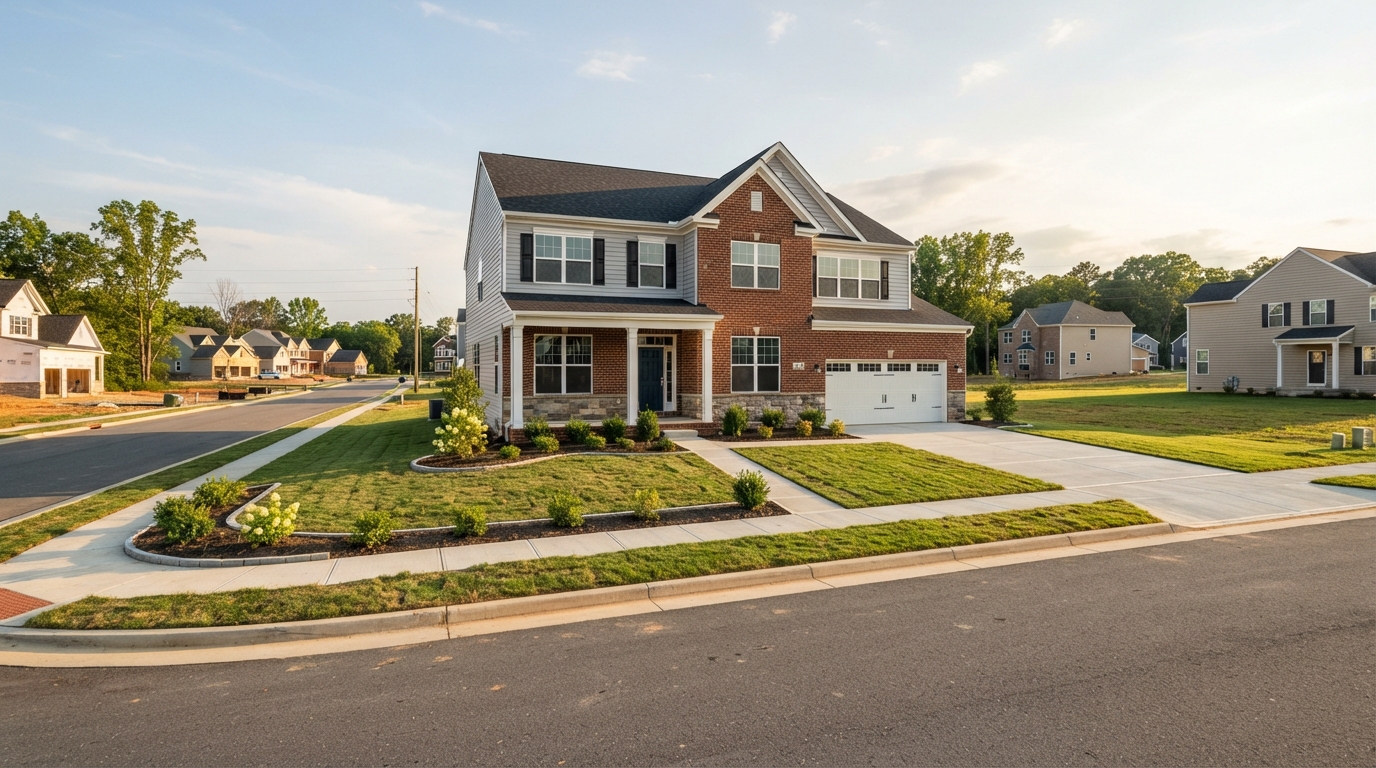
Moving to Waldorf MD: The Numbers to See First (Part 14 of 20: The Southern Maryland Buyer and Seller Files)
This is Part 14 of The Southern Maryland Buyer and Seller Files from Donnell Williams Jr. and DMV Prime Properties, a twenty-part series answering what people in Prince George's and Charles County are actually asking this month.
Search "moving to Waldorf MD" and the first thing most people get is a list of pros and cons, usually assembled by someone with a camera and an opinion. Those videos are not useless. They are just the wrong place to start.
Donnell Williams Jr., Broker-Owner of DMV Prime Properties, works both Prince George's and Charles County and has a straightforward view on this. A relocation decision is a financial decision first and a lifestyle decision second, and the financial part is knowable. There are closed sale figures, tax figures, days-on-market figures and program rules that answer most of the real questions before anyone needs to argue about whether the area has enough going on.
So here is Waldorf in numbers, which turn out to tell a more interesting story than the pros-and-cons format usually captures.
The Waldorf headline figures
Across 1,397 closed sales in Prince George's and Charles County settling between July 1 and August 22, 2026, Waldorf recorded 147 closings at a median sale price of $430,000, a median of 17 days on market, and a median annual property tax figure of $4,667, which works out to roughly $389 a month.
That volume is worth registering on its own. At 147 closings, Waldorf was one of the busiest single submarkets in the entire two-county data set, and it accounted for close to half of all Charles County activity in the window.
Charles County overall recorded 318 closings at a median sale price of $440,000, a median 21 days on market, and a median annual tax of $4,948, about $412 a month. So Waldorf came in below the county median on price, below it on tax, and four days faster on the market.
Neither slow nor cheap by accident
Put those two lines side by side and the shape of the thing becomes clear.
Waldorf sold at $430,000 against a Charles County median of $440,000 and a Prince George's County median of $449,000 across 1,079 closings. It also sold in 17 days at the median, faster than Charles County's 21 days and faster than Prince George's County's 20 days.
Lower price and faster pace do not usually travel together, and when they do it generally means demand is meeting a supply of homes in a band that a lot of households can actually finance. Across both counties this summer, 22.5 percent of closings landed between $300,000 and $400,000 and 26.7 percent landed between $400,000 and $485,000. That $400,000 to $485,000 band is the single largest slice of the market, and Waldorf's median sits inside it.
The financing mix supports the same reading. Of the 1,397 closings across both counties, 384 were FHA at a median sale price of $430,000 and a median 24 days on market, 599 were conventional at a median of $459,900 and 17 days, 223 were VA at a median of $500,000 and 23 days, and 151 were cash at a median of $260,000 and 21 days. FHA and VA together accounted for 607 closings, about 43 percent of the market. The FHA median of $430,000 lands exactly on Waldorf's median, which is not a coincidence so much as a description of who is buying in that price band.
That is the mechanical explanation for the pace. It is not a prediction about where anything goes next, and nobody should read it as one.
How the Charles County neighbors compare
Waldorf is easier to understand next to the two submarkets buyers most often weigh against it.
White Plains recorded 43 closings at a median sale price of $450,000, a median of 38 days on market, and a median annual tax of $4,970. La Plata recorded 55 closings at a median of $477,590, a median 19 days on market, and a median annual tax of $6,073.
Three different pictures. Waldorf is the volume market, priced lowest of the three and moving fastest. White Plains priced above Waldorf and took considerably longer at the median, 38 days against 17. La Plata priced highest of the three, moved at a pace close to Waldorf's, and carried a median annual tax figure roughly $1,400 above Waldorf's.
None of that makes one place better than another. It means three different combinations of price, pace and carrying cost, and a buyer should pick the combination that matches their situation rather than the one with the nicer video.
The tax line, and the number most buyers miss
The median annual tax figure of $4,667 in Waldorf, about $389 a month, is a real part of the payment and should be in the budget from the first conversation rather than discovered at the closing table.
But there is a second tax fact that matters more over a long hold, and almost nobody moving into Charles County knows it.
Maryland's Homestead Tax Credit caps the annual increase in the taxable assessed value of a principal residence. The cap percentage is set locally. Per SDAT's published County and Municipal Homestead Credit Percentages table effective July 1, 2024, the State of Maryland figure is 10 percent, Prince George's County is 3 percent, and Charles County is 7 percent.
Read that again, because it is the single biggest structural difference between buying in the two counties. A Charles County homeowner's taxable assessed value can rise more per year under the cap than a Prince George's County homeowner's can. Over a long ownership period, in a rising assessment environment, that is not a rounding difference.
Two important caveats. Prince George's County's own finance webpage describes its county cap differently than the SDAT table does, so any buyer relying on the 3 percent figure should confirm the current number directly with SDAT. And the credit is not automatic in either county. It requires a one-time application to SDAT, available through Maryland OneStop or by mail or fax, and the property must be a principal residence occupied at least six months of the year including July 1. SDAT can be reached at sdat.homestead@maryland.gov or 1-866-650-8783.
Donnell is a broker rather than a tax advisor, an attorney or a lender. These are figures to confirm with SDAT and the county for the specific property before treating them as settled.
What new construction looks like in Charles County
New construction is a significant part of the Charles County conversation, and the data separates the three markets sharply.
Across both counties this summer, 141 of the 1,397 closings were new construction, about one in ten, at a median sale price of $519,950 and a median 27 days on market, with 40 percent closing above original list price. Resale accounted for 1,256 closings at a median of $435,000 and a median 19 days, with 33 percent above original list.
Inside Charles County, the picture splits by town. White Plains recorded 16 new construction closings at a median of $413,940. La Plata recorded 17 at a median of $459,590. Waldorf recorded 13 at a median of $584,685.
That Waldorf figure is the surprise for most buyers. Waldorf's new construction median came in more than $150,000 above its overall median sale price of $430,000, and it was the highest new construction median of the three Charles County towns despite Waldorf being the lowest-priced of the three overall. A buyer who assumes new build in Waldorf will land near the town median is going to be recalibrating on the first sales trailer visit.
A related note from online chatter. Threads about specific Waldorf-area builder communities show up regularly on regional real estate forums, which is a fair signal that new construction is where a lot of the local search interest sits.
A cautionary thread worth reading
About three and a half weeks before this post was written, a buyer posted a detailed question on a national real estate forum asking whether he was making a mistake purchasing a Waldorf townhouse.
The specifics: a $500,000 townhouse, roughly 10 years old, no seller concessions, a clean inspection. He had near-perfect credit and no debt, had been quoted 6.6 percent while expecting 6.1 percent, and estimated the payment at about $3,500 a month excluding utilities, against take-home pay of about $6,000 a month, with a $140 monthly HOA. He was comparing two lenders, one of which carried a 1 percent origination fee plus a 1.75 percent funding fee.
Twenty-seven people responded. One commenter made the market observation that matters here: $500,000 is top of market for a Waldorf townhouse. The buyer terminated the contract during his inspection period.
Two lessons sit in that thread. The first is that a price can be technically supportable and still be at the ceiling for the property type, which is exactly the kind of thing local closed sale data answers and a national forum only guesses at. The second is that the payment-to-income relationship, not the purchase price, is what actually decides whether a house is affordable to a household.
For rate context, Freddie Mac's Primary Mortgage Market Survey for the week ending August 20, 2026 put the 30-year fixed at 6.65 percent, down from 6.67 percent the prior week and up from 6.58 percent a year earlier, with the 15-year fixed at 5.95 percent.
The commute is the trade
None of the above is free. The 301 corridor commute is the thing Waldorf buyers are exchanging for the price and the pace, and it is the single variable most likely to change how a household feels about the purchase two years in.
That argument was made in full in Part 12 of this series and it does not need repeating here, except for the one instruction that carries over exactly. Drive the actual route, from the actual address, on an actual weekday, at the actual hour, in both directions, twice. Not once, and not on a Saturday afternoon after a showing.
A commute is the only feature of a home that a household experiences every single day and the only one that no listing photograph shows.
Start with the data, then go look
The point of leading with numbers is not that lifestyle does not matter. It is that lifestyle questions get answered better after the financial frame is set, because a buyer who knows Waldorf closed 147 sales at a $430,000 median in 17 days is asking sharper questions on tour than one who has only watched a video.
Donnell works Charles County and Prince George's County both, and he can pull the same closed sale detail for a specific street, a specific builder community or a specific property type rather than a whole town. Reach him at 301.818.0313 or donnell@dmvprimerealty.com to get the actual numbers for the neighborhoods on your list before you spend a weekend touring the wrong ones.
Part 15 closes The Southern Maryland Buyer and Seller Files with the last question local buyers and sellers are asking this month.


.png)

.png)