
June Home Maintenance Checklist for DMV Homeowners
June in the Washington DC metro area means one thing above everything else: the heat and humidity are coming and your home needs to be ready for them. The DMV's summer climate is notoriously punishing, with high temperatures, oppressive humidity levels, and afternoon thunderstorms that can expose every weakness in your home's exterior and drainage systems.
Proactive maintenance in June protects your home's value, prevents costly emergency repairs, and keeps your living environment comfortable through the longest stretch of the year. Here is your complete June home maintenance checklist built specifically for DC, Maryland, and Northern Virginia homeowners.
HVAC: The Most Important Item on Your List
If you only do one thing from this checklist, make it this one. Having your air conditioning system serviced before the peak of summer heat is the single most important home maintenance task for DMV homeowners in June.
The DMV summers routinely push heat indices above 100 degrees Fahrenheit. An HVAC system that fails in late July or August in this region is not just uncomfortable. It is a genuine health risk, particularly for elderly residents and young children. Emergency HVAC calls in the middle of a heat wave come with significant premium pricing and potentially long wait times.
A professional HVAC tune-up in June should include cleaning the condenser coils, checking refrigerant levels, testing electrical connections, lubricating moving parts, and verifying that the thermostat is calibrated correctly. Budget $75 to $150 for a standard tune-up with a reputable local contractor.
Change your air filters now if you have not done so recently. During summer months in the DMV, filters should be replaced every 30 to 45 days rather than the standard 90-day cycle. The combination of higher system run times and outdoor pollen and humidity means filters clog faster.
Basement Humidity: A Maryland and DC-Specific Priority
If you own a home in Maryland, particularly in Prince George's County, Charles County, or Montgomery County, basement humidity management is not optional. The DC metro area's humid subtropical climate creates conditions where unchecked basement moisture can lead to mold growth, structural damage, and air quality issues throughout the home.
Check your dehumidifier now. If you do not have one, June is the time to install one. A quality basement dehumidifier running throughout summer in the DMV can maintain humidity levels between 30% and 50%, the safe range for preventing mold. Expect to pay $200 to $400 for a quality unit and plan to empty the collection reservoir daily during peak humidity weeks.
Check basement walls and floors for any signs of water intrusion from spring rains. Look for efflorescence (white mineral deposits on concrete walls), musty odors, or visible moisture. Address any water intrusion issues before the summer storm season intensifies them.
For homes with crawl spaces rather than basements, common in older parts of Charles County and Southern Maryland, check that your crawl space vapor barrier is intact and that vents are properly screened.
Gutters and Downspouts: Storm Season Preparation
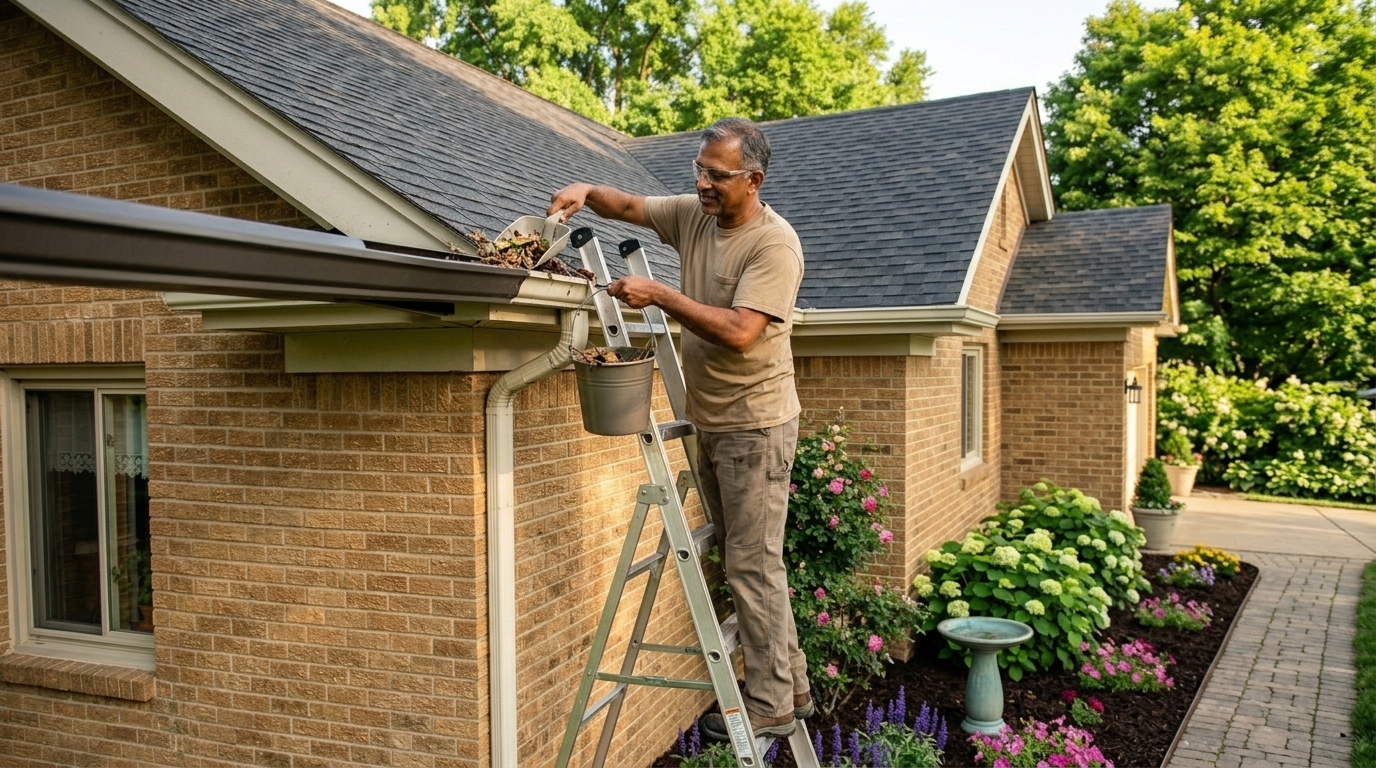
Summer in the DMV brings frequent afternoon thunderstorms, many of them intense. Gutters and downspouts clogged with spring debris become a serious liability when two inches of rain falls in 45 minutes.
Clear gutters of all debris from spring including leaves, seed pods, and tree pollen buildup. Check that all downspouts are securely attached and that water is being directed at least six feet away from your home's foundation. Standing water against your foundation is one of the leading causes of basement water intrusion and foundation issues in the DMV.
Check gutter seams and end caps for any leaks or separations. A small gutter leak becomes a major water intrusion problem when a summer storm delivers heavy rainfall.
Roof Inspection: Ground-Level Visual Check
You do not need to climb on your roof. A ground-level visual inspection with binoculars is sufficient for most homeowners. Look for missing or visibly damaged shingles, lifted flashing around chimneys and skylights, and any areas where the roofline appears to sag or depress.
The DMV's summer thunderstorm season can produce hail and high winds that cause roof damage. Catching issues before they allow water penetration protects you from the much larger cost of interior water damage, ceiling repairs, and mold remediation.
If you see anything concerning, call a licensed roofing contractor for a professional inspection before the heaviest storms arrive. Many DMV roofing contractors offer free inspections.
Window and Door Seals: Energy Efficiency and Comfort
Check the caulking and weatherstripping around all exterior windows and doors. The DMV's temperature extremes, hot and humid summers and cold winters, cause caulk and weatherstripping to deteriorate faster than in more moderate climates.
Failed window seals allow conditioned air to escape, driving up your cooling costs significantly. The Department of Energy estimates that air leaks around windows and doors account for 25% to 30% of residential heating and cooling costs. Re-caulking exterior windows is a straightforward weekend task with immediate payback in reduced utility bills.
Safety Devices: Smoke Alarms and Carbon Monoxide Detectors
June is an ideal time to test every smoke alarm and carbon monoxide detector in your home and replace batteries as needed. Summer brings increased grilling activity, window air conditioning units, and outdoor generators during power outages, all of which create conditions where working detectors are critical.
Replace any smoke alarm that is more than ten years old. Replace carbon monoxide detectors every five to seven years. Check your fire extinguisher to confirm it is charged and accessible.
Exterior and Landscaping Tasks
The DMV's summer growing season is aggressive. Overgrown vegetation against your home's foundation or siding can trap moisture and create pathways for pests.
Trim back any shrubs or plants that are in contact with your home's siding, foundation, or roof overhang. Keep mulch at least six inches away from your foundation to prevent moisture retention against the structure.
Check exterior wood surfaces including decks, fences, and window trim for peeling paint or signs of rot. Addressing wood deterioration in June while weather is dry prevents much larger repairs later.
Pest Inspection: A DMV-Specific Priority
Maryland homes, particularly older ones in Prince George's County, Charles County, and Montgomery County, should have a professional termite inspection every one to two years. The DC metro area is in a moderate to heavy termite pressure zone according to the USDA, and termite damage is typically not covered by standard homeowner's insurance.
Schedule a pest inspection in June before the peak summer activity period for termites and other wood-destroying insects. Treatment is significantly less expensive than structural repair.
What Deferred Maintenance Costs You at Resale
Here is the real estate angle every DMV homeowner should understand. According to current DMV market analysis, homes requiring immediate work are selling at significant discounts to well-maintained properties. A light pre-market refresh, addressing deferred maintenance, touching up paint, and servicing HVAC, often yields 5% to 12% higher sale prices in the DMV. That translates to $25,000 to $60,000 more in your pocket on a $500,000 home.
If you are thinking about selling your home in the next one to two years, treat this June maintenance checklist as an investment in your future sale price, not just a seasonal chore.
June Home Maintenance Checklist: Quick Reference
HVAC system service and filter replacement: Priority 1Basement dehumidifier check and activation: Priority 1 for Maryland homesGutters and downspouts clear and functional: Priority 1Roof visual inspection from ground levelWindow and door caulking and weatherstripping checkSmoke alarm and carbon monoxide detector testingTrim vegetation away from foundation and sidingExterior wood surfaces inspection and touch-upPest and termite inspection: especially for Maryland homesCrawl space vapor barrier check if applicable
Need Help or Thinking About Selling?
If any of your June maintenance reveals issues you are not sure how to address, or if you are thinking about what your well-maintained home is worth in today's market, we can help.
Get your free home valuation at hmbt.co/trMYK6 to understand what your maintained home is worth right now. Or book a free consultation at donnellwilliams.com/donnells-calendar to discuss your options whether you are staying put or considering a sale.
A well-maintained home is a more valuable home. June is the time to make sure yours qualifies.
Published as part of our June Homeownership Month series. New posts every day throughout June covering everything DMV buyers, renters, and homeowners need to know about the local market.


.png)

.png)