
Front Foot Benefit Charges: The Fourth Bill on Your New Construction Home (Part 4 of 5: The Southern Maryland Money Guide)
This is Part 4 of The Southern Maryland Money Guide from Donnell Williams Jr. and DMV Prime Properties, a five-part series on the money side of buying and owning a home in Prince George's and Charles County.
Ask a buyer under contract on a new build what their monthly housing cost will be and most of them can name three numbers. The mortgage payment. The property taxes. The HOA dues.
In Prince George's County and parts of Charles County, there is frequently a fourth, and almost nobody names it. It is called a front foot benefit charge, and Donnell Williams Jr., Broker-Owner of DMV Prime Properties, considers it the single most under-explained line item in local new construction.
It is not a scam. It is not hidden in the legal sense, because Maryland requires it to be disclosed. But disclosed and explained are different things, and this charge tends to live on a page in a stack of paperwork that a buyer signs on a Tuesday afternoon after three hours of signing other paperwork.
What the charge actually pays for
The logic behind it is straightforward once someone says it out loud.
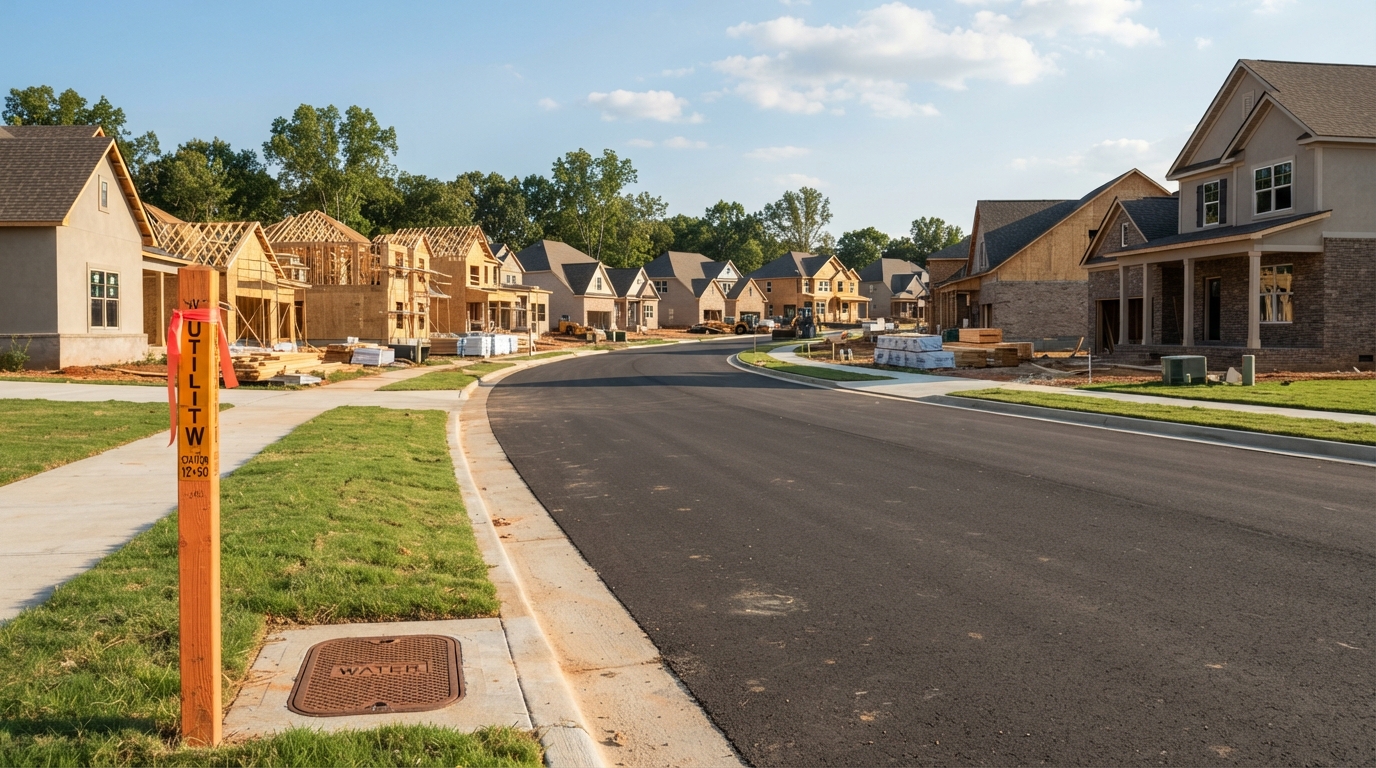
When a developer builds a new subdivision, somebody has to pay to run water and sewer mains to the properties. That infrastructure is expensive, and it goes in before a single house is sold.
Rather than the utility or the county funding it up front, the developer or a private company fronts the cost of installing those lines. That cost is then recovered from the properties that benefit from them, billed annually over a defined term of years.
The name describes the old method of calculating it. The charge was historically apportioned by the number of linear feet of frontage a lot had along the street where the line ran, so a wider lot carried a larger share. Hence front foot benefit.
In the Washington Suburban Sanitary Commission service area, which covers Prince George's and Montgomery counties, WSSC administers a front foot benefit charge program directly. Elsewhere in Maryland, and in many private developments, the same economic arrangement exists under a different label: a private deferred water and sewer assessment, sometimes assigned to a third-party company that holds the right to collect.
The part that catches buyers
Two features of this charge produce most of the surprise.
The first is that it does not belong to the developer. It attaches to the property. Whoever owns the house when the annual bill comes due is the one who pays it, for as long as the term runs.
That means a buyer purchasing a six-year-old home in a Brandywine or Accokeek subdivision may be inheriting the remainder of a term that started before they ever saw the house. The original buyer paid six years of it. The new buyer picks up whatever is left.
The second is that it is separate from property taxes and separate from HOA dues. A buyer who carefully budgets taxes and HOA and considers themselves thorough can still be blindsided, because this is a third recurring obligation that neither of those categories includes.
Maryland requires disclosure, which is not the same as clarity
Maryland law requires sellers to disclose the existence of a private deferred water and sewer assessment, including the amount and the remaining term, when transferring residential property subject to one.
Title companies and real estate attorneys across the state write about this regularly, and they write about it seriously, because a missed disclosure creates real liability. Eagle Title, Shulman Rogers, Smart Settlements and others all publish guidance on it.
Here is what Donnell noticed while researching this piece. Nearly every clear explanation of front foot benefit charges available online is written by a title company or a law firm, and it is written for other professionals. It explains what the disclosure obligation is and what happens if it is missed.
Almost none of it is written for the person who will actually be paying the bill.
That gap is the reason this post exists. A buyer does not need to understand disclosure liability. A buyer needs to know that a fourth bill may exist, what it costs per year, and how many years are left.
The three questions to ask before you go under contract
Donnell gives DMV Prime Properties buyers the same three questions for every new construction contract and every resale in a subdivision built within roughly the last twenty-five years.
Is there a front foot benefit charge or a deferred water and sewer assessment on this property?
If so, what is the annual amount?
How many years remain on the term?
Then a fourth instruction that matters as much as the questions: get the answers in writing, from the builder's sales office or the listing agent, before the contract is signed rather than during the document review at settlement.
A sales representative in a model home who cannot answer these questions on the spot is not being evasive. They frequently do not know, because it is not a question they are asked. But the answer exists in the community's documents, and asking early gives everyone time to find it.
Where the charge is actually documented
Buyers who want to verify this themselves rather than take a sales office's word for it have several places to look, and it is worth knowing them because the answer is rarely in one obvious spot.
The seller disclosure is the first place. Maryland's residential property disclosure and disclaimer paperwork addresses deferred water and sewer assessments, and a resale seller subject to one is required to address it there.
The title commitment is the second and often the most reliable. A private deferred water and sewer assessment is typically recorded against the property in the land records, which means the title company's search should surface it as an exception on the commitment. Buyers receive that commitment during the contract period and almost never read it. This is a good reason to start.
For properties in a homeowners association, the resale package or community documents frequently reference it, since the assessment usually originated with the same development that created the association.
For new construction, the builder's community documents and the public offering materials are the place to ask, and the sales office should be able to produce them.
And in the WSSC service area covering Prince George's and Montgomery counties, WSSC maintains information about its own front foot benefit charge program directly.
Donnell's practical advice is to ask the sales office or listing agent first, in writing, and then verify against the title commitment when it arrives. If those two sources disagree, that discrepancy needs to be resolved before settlement rather than after, because after settlement the buyer owns both the house and the disagreement.
A real estate attorney or the title company is the right party to interpret a recorded assessment. A blog post is not, and this one is not attempting to be.
How it changes the math
Consider what a buyer is really comparing when they weigh a new build against a resale.
Across 1,397 closed sales in Prince George's and Charles County settling between July 1 and August 22, 2026, homes flagged as new construction carried a median sale price of $519,950. Resale homes carried a median of $435,000.
That $85,000 gap already gives most buyers pause. But the comparison people actually make is a monthly one, and the monthly comparison has more moving parts than the price difference suggests.
New construction in this window took longer to sell, with a median of 27 days on market against 19 days for resale, and a slightly higher share closing above original list price, 40 percent versus 33 percent. Newer homes generally carry lower near-term maintenance and repair costs, which is a real and legitimate advantage.
On the other side of the ledger, newer subdivisions are more likely to carry an HOA, and more likely to carry a front foot benefit charge. Of all closings in the dataset, 621 of 1,397, roughly 44 percent, were flagged as having a homeowners association, with a median association fee of $144 per month.
A buyer who prices a new build against a resale using the mortgage payment alone is not comparing the two homes. They are comparing two thirds of one home to all of the other.
Where this comes up most in Southern Maryland
New construction is a meaningful share of this market, and the activity clusters.
In that same July and August window, Brandywine recorded 30 new construction closings at a median of $478,992, the most of any submarket in the two counties. Upper Marlboro recorded 28 at a median of $529,990. La Plata recorded 17 at a median of $459,590, White Plains 16 at a median of $413,940, and Waldorf 13 at a median of $584,685. Accokeek recorded three at a median of $524,070.
These are precisely the submarkets where the question is worth asking, and where Donnell asks it on behalf of clients as a matter of routine.
It is also worth noting the resale angle. A homeowner in one of these communities preparing to list is required to disclose the charge, and a listing that handles the disclosure clearly and early tends to move more smoothly than one where it surfaces during the buyer's document review. Sellers who know their remaining term and annual amount before going to market are simply better prepared.
The larger point
None of this is an argument against buying new construction in Prince George's or Charles County. Donnell's practice is built substantially on new construction, and for many buyers a new home is the right call.
The argument is against buying anything on an incomplete number. A payment quote that omits a recurring annual obligation is not a payment quote. It is an estimate with a piece missing, and the piece tends to reveal itself after the buyer has already committed.
Nothing in this post is legal advice, and the specifics of any individual assessment depend on the community's recorded documents. Buyers should have their agent and their title company confirm the details for the specific property in question.
Ask before you sign, not after
Anyone touring model homes in Brandywine, Accokeek, Upper Marlboro, White Plains or Waldorf right now should walk into the next sales office with those three questions ready. And anyone who would rather have someone else ask them, and read the community documents properly before a contract is signed, can bring Donnell along.
DMV Prime Properties represents buyers in new construction transactions at no cost to the buyer in most cases, provided the agent is registered on the first visit to the community. Reach the office at 301.818.0313 or donnell@dmvprimerealty.com before that first model home tour, because on most builder registration policies, after is too late.
Part 5 of The Southern Maryland Money Guide puts all of it together and answers the question underneath this entire series: what does a home in Prince George's and Charles County actually cost every month?


.png)

.png)