
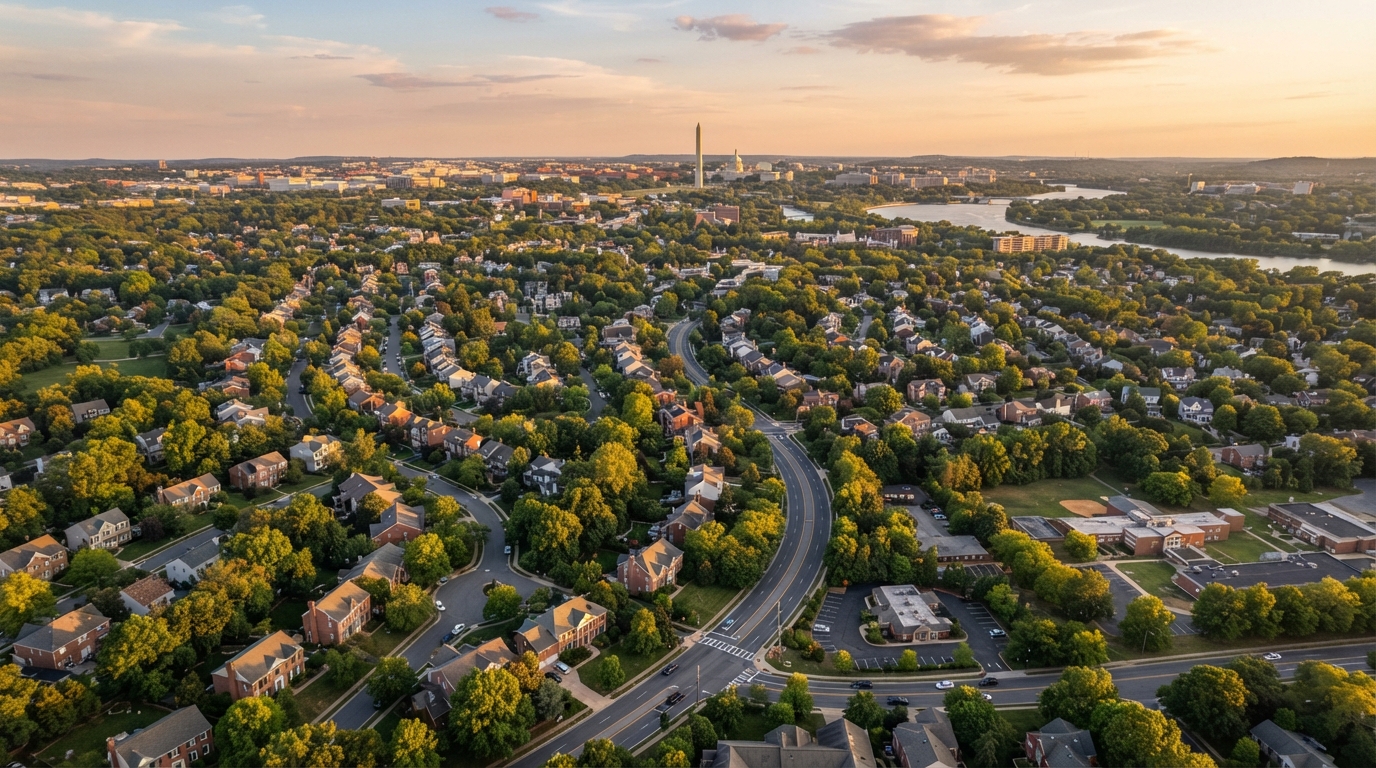
The DMV Real Estate Market in the Second Half of 2026: What to Expect
We are at the midpoint of 2026, which makes this an appropriate moment to assess where the Washington DC metro real estate market stands and what buyers and sellers should reasonably expect for the second half of the year.
The short answer: a market that rewards preparation, punishes overpricing, and continues to offer genuine opportunity for buyers and sellers who move with good data and clear strategy.
Here is the full picture.
Where the Market Stands at Midyear
According to Freddie Mac, the 30-year fixed mortgage rate stood at 6.43% as of July 2, 2026, down from 6.85% a year ago and continuing a gradual improvement trend. Rates are expected to continue their gradual decline, potentially reaching the low 6% to high 5% range by late 2026. Even a modest rate improvement from 6.43% to 6.0% saves a buyer approximately $140 per month on a $500,000 mortgage.
The DC metro median sold price reached $680,000 in May 2026 according to Bright MLS. According to Redfin, the three-month average ending May 2026 shows Washington DC specifically at a median sale price of approximately $694,584, down 0.77% year-over-year with homes selling after an average of 49 days on market.
Total home sales in the DC region are projected to increase by 9.6% in 2026, reaching approximately 55,650 sales. That volume increase, combined with improving inventory, signals that the market is becoming more active even as individual price points stabilize rather than spike.
The Rate Trajectory and What It Means
The gradual decline in mortgage rates is the single most important variable for the second half of 2026. Every 0.25% improvement in rates meaningfully improves affordability and typically stimulates buyer activity.
Buyers who have been waiting on the sidelines hoping for rates to drop significantly should understand two things. First, the improvement will likely be gradual rather than dramatic, rates are expected to approach the high 5% range by year-end, not drop to 4% or 5% levels. Second, rate improvement brings more buyer competition into the market. The buyers who move while rates are still in the mid-6% range benefit from less competition than those who wait until rates have fully improved and bring a wave of previously sidelined buyers into the market simultaneously.
The historic pattern in DMV real estate is consistent: waiting for the perfect moment to buy has most often meant buying later at higher prices. The buyers who benefited most in prior cycles were those who entered the market at moments of more measured competition rather than waiting for the signal that "now is the time", which typically arrives only after values have already moved.
The Inventory Picture for the Second Half
Active listings across the DC metro area are up over 33% year-over-year with projections suggesting another 14% increase through 2026. In Washington DC specifically, the condo market has 5.47 months of supply, well into buyer's market territory for that segment.
For detached single-family homes, inventory remains constrained at approximately 55% of 2019 levels. This means the single-family home market and the condo market are operating in completely different supply and demand environments simultaneously, a duality that requires buyers and sellers to make submarket-specific assessments rather than relying on headline DMV statistics.
The inventory increase for the second half of 2026 is expected to continue driven primarily by federal workforce uncertainty continuing to push some DC-area homeowners to list and relocate, new construction deliveries in several Maryland and Northern Virginia communities, and sellers who delayed listing during spring now coming to market in fall.
What to Expect by Submarket
Washington DC condos: Buyer's market conditions are likely to persist through the rest of 2026. Buyers in this segment have genuine leverage on price, contingencies, and terms. Sellers need accurate pricing and strong presentation to compete.
Detached single-family homes in strong DMV suburbs: Supply remains tight and demand from buyers seeking more space continues. Well-priced, well-presented homes will continue to sell competitively. The 5.8% year-over-year price increase in this segment through May 2026 is likely to moderate but not reverse for the remainder of the year.
Prince George's County: Inventory up 29.6% year-over-year provides buyers with the best selection in years. Combined with significant down payment assistance available through PGCPAP and the Maryland Mortgage Program, PG County remains the most compelling value market in the DMV for first-time buyers.
Northern Virginia suburbs: Continued strong demand particularly in Fairfax and Loudoun counties driven by technology sector employment and ongoing Amazon HQ2 effect. Moderate price growth expected through year-end.
The Federal Workforce Factor
The ongoing uncertainty around federal employment remains the defining DMV-specific variable for the second half of 2026. BrightMLS chief economist Lisa Sturtevant has noted that weaker markets will be concentrated in the District and in areas most affected by return-to-work policies, while suburban jurisdictions will remain stronger.
The practical implication: federal employees and contractors who are uncertain about their employment situation are more likely to remain renters than become buyers in the near term, which slightly reduces buyer demand in the DC urban core while not significantly affecting suburban markets where the buyer pool draws more broadly from technology, healthcare, and professional services sectors.
Positioning for the Second Half
For buyers: the second half of 2026 offers a window where inventory is improved, competition is measured rather than frenzied, and rate improvements are gradually occurring. This is a more favorable buying environment than 2021 to 2023 across most DMV submarkets. Buyers who are financially prepared and have a clear target will find opportunities that were not available a few years ago.
For sellers: accurate pricing from day one matters more in the second half of 2026 than it has in years. The sellers who are struggling are those who have priced based on peak market assumptions. The sellers who are succeeding are those who price to current comparable sales, present their homes thoughtfully, and understand which buyers are active in their specific segment.
For both: the right strategy depends on your specific property type, location, timeline, and financial situation. Generic market forecasts are useful context but not a substitute for granular, submarket-specific guidance.
Book your free consultation at donnellwilliams.com/donnells-calendar. We will translate the broader market picture into a specific strategy for your situation in today's DMV market.
Published as part of our June Homeownership Month series. New posts every day throughout June covering everything DMV buyers, renters, and homeowners need to know about the local market.


.png)

.png)