
The DMV Home Buying Process: A Step-by-Step Guide
Buying a home in the Washington DC metro area is not the same as buying a home anywhere else in the country. The DMV spans three jurisdictions, Washington DC, Maryland, and Virginia, each with its own contract forms, disclosure requirements, closing costs, and legal processes. Understanding the full buying process before you start saves you time, money, and significant stress.
Here is the complete step-by-step guide to buying a home in DC, Maryland, or Northern Virginia in 2026.
Step 1: Get Your Finances in Order
Before you speak to a lender or tour a single home, do an honest audit of your financial situation. Pull your credit reports from all three bureaus. Know your scores. Calculate your monthly debt obligations. Understand how much you have available for a down payment and closing costs.
In the DMV, closing costs typically run 2% to 5% of the purchase price for buyers, on top of your down payment. On a $450,000 home that means budgeting $9,000 to $22,500 in closing costs in addition to your down payment. This surprises many first-time buyers who only planned for the down payment itself.
If your credit score has room to improve, even 60 to 90 days of focused credit work can meaningfully improve your rate. The difference between a 680 and 740 score can be a quarter to half a point on your mortgage rate, which translates to tens of thousands of dollars over the life of your loan.
Step 2: Identify Which Assistance Programs You Qualify For
This step happens before pre-approval, not after. DC, Maryland, and Virginia all have first-time buyer assistance programs that must be factored into your financing strategy from the start. HPAP in DC, the Maryland Mortgage Program, Virginia Housing grants, and county-specific programs in Fairfax and Prince George's counties all require specific lender relationships and sometimes specific loan products.
Knowing which DMV assistance programs you qualify for changes your entire financial picture and often determines which lenders you should be working with. Visit donnellwilliams.com/first-time-buyers to explore your options.
Step 3: Get Pre-Approved, Not Pre-Qualified
Pre-qualification is a five-minute estimate based on unverified information. Pre-approval is a full underwriting review of your income, assets, credit, and debts that produces a firm commitment letter from a lender.
In the DMV's competitive market, a pre-approval letter is your entry ticket. Listing agents and sellers will not take offers seriously from buyers who are not already pre-approved. Many sellers will not even allow showings without proof of pre-approval.
Make sure your lender is approved to originate the specific assistance programs you plan to use. Not every lender is approved for HPAP, MMP, or VHDA loans and working with the wrong lender can disqualify you from programs you rightfully deserve.
Step 4: Choose Your Agent and Define Your Search
Choosing the right buyer's agent in the DMV is one of the most consequential decisions in the process. Your agent represents your interests exclusively, negotiates on your behalf, and guides you through a process with significant legal and financial stakes.
In the DC metro area, look for an agent who is licensed in all three DMV jurisdictions, has specific experience in your target markets, understands the assistance programs available to you, and has a track record you can verify through reviews and recent transactions.
Define your search criteria clearly: target jurisdictions, price range, property type, must-haves versus preferences, and commute requirements. The DMV is a large and diverse market and clarity on your parameters saves significant time.
Step 5: Tour Homes Strategically
In the current 2026 DMV market, buyers have more time to make decisions than they did in 2021 to 2023. Use that time wisely. Tour at least three to five homes before making any offers to calibrate your sense of value in your target market. Note condition issues carefully. Understand what is a cosmetic issue versus a structural concern.
Pay attention to the neighborhood as much as the home. In the DMV, proximity to transit, school district lines, and neighborhood trajectory matter enormously to long-term value. A slightly smaller home in a stronger neighborhood will almost always outperform a larger home in a weaker one.
Step 6: Make a Strategic Offer
When you find the right home, your offer strategy needs to be built around the specific property and the current market conditions in that submarket. What works in Bowie is different from what works in Arlington.
Your offer package in the DMV typically includes the purchase price, earnest money deposit of 1% to 3% of the purchase price, contingencies including financing, inspection, and appraisal, requested closing date, and any seller contributions to closing costs.
In competitive situations your agent may recommend an escalation clause, a pre-offer inspection, or other strategies to strengthen your position without simply overpaying.
DMV-Specific Nuances Most Buyers Never Hear About
Washington DC: TOPA Rights. DC's Tenant Opportunity to Purchase Act gives current tenants of rental properties the right of first refusal when their unit is sold. If you are buying a property in DC that has a tenant, TOPA can significantly extend your timeline. Understanding this before you make an offer saves enormous frustration.
DC Transfer Taxes. DC sellers pay a transfer tax of 1.1% for homes under $400,000 and 1.45% for homes over $400,000. Buyers pay a recordation tax on the same scale. These costs are in addition to standard closing costs and must be budgeted for accurately.
Maryland Recordation Fees. Maryland counties charge recordation fees that vary by county. Prince George's County charges 0.975% of the purchase price. These fees are paid by the buyer at closing and represent a significant line item on your settlement sheet.
Virginia Attorney Requirements. Virginia does not require an attorney to be present at closing but it does require a licensed title agent. Selecting your own title company rather than using the seller's preferred company can sometimes save you money.
Step 7: Complete Due Diligence
Once your offer is accepted you typically have a contractual period for due diligence including home inspection, radon testing, and in some cases structural or systems inspections. In the DMV do not waive your inspection contingency lightly. The region's housing stock includes many older rowhouses, townhomes, and converted properties where deferred maintenance or systemic issues can be costly.
Use the inspection period to negotiate repairs or credits from the seller where warranted. This is a normal part of the process and a skilled agent will know exactly which items are worth pushing for and which are not.
Step 8: Navigate the Appraisal and Financing Final Steps
Your lender will order an appraisal to confirm the home's value supports the purchase price. In a competitive market where offers have been made above asking price, appraisal gaps can occur. Understand your contract's appraisal contingency and what your options are if the home appraises below the purchase price.
During this period stay extremely close to your loan conditions. Do not open new credit accounts, change jobs, or make large purchases. Any of these can jeopardize your final loan approval.
Step 9: Final Walk-Through and Closing
Within 24 to 48 hours of closing you will conduct a final walk-through of the property to confirm it is in the agreed-upon condition and that all negotiated repairs have been completed. This is not a second inspection. It is a confirmation.
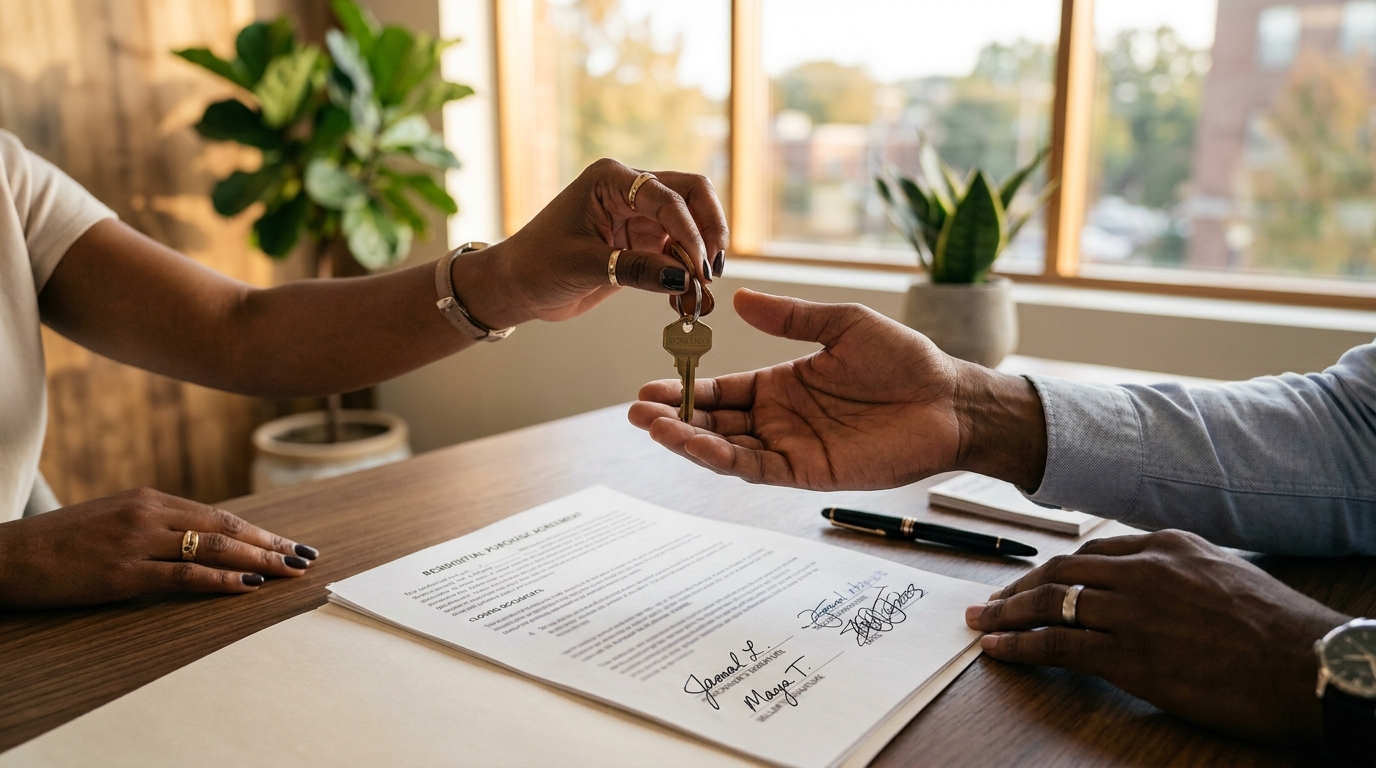
At closing you will sign an extensive package of documents, pay your closing costs and remaining down payment, and receive the keys to your new home. In the DMV, closings are typically handled by a title company with an attorney or settlement agent present.
Ready to Start Your Home Buying Process?
The DMV home buying process is manageable with the right guide. The buyers who have the smoothest experiences are the ones who start with a strategy rather than jumping directly to Zillow.
Book your free buyer consultation today at donnellwilliams.com/donnells-calendar. We will walk through your specific situation, identify your programs, connect you with an approved lender, and build a step-by-step plan customized for your timeline and target market.
Published as part of our June Homeownership Month series. New posts every day throughout June covering everything DMV buyers, renters, and homeowners need to know about the local market.


.png)

.png)